Best Reverse Osmosis Systems for Well Water (2026)
PureFlow Lab is reader-supported. We may earn a commission when you buy through links in this guide — at no extra cost to you. As an Amazon Associate, we earn from qualifying purchases. See our Disclosure for details.
Well water changes the reverse osmosis equation. Unlike city water, a private well isn’t chlorinated, isn’t pressure-regulated, and can carry iron, sediment, and bacteria that municipal supplies don’t. So the best RO system for a well isn’t necessarily the best RO system for a city home — you want UV sterilization for the bacteria a membrane can miss, often a booster pump for low well pressure, and a plan to protect the membrane from the sediment and iron that wear it out. This guide covers the systems built for that, and the realities every well owner should know first.
Top Picks (At a Glance)
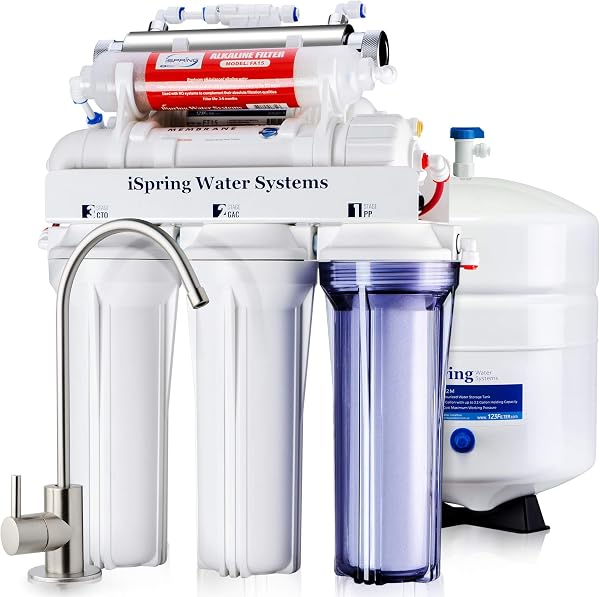
iSpring RCC7AK-UV — 7-Stage Alkaline + UV
The standout well-water pick. The proven iSpring RCC7AK plus an 11W UV sterilization stage that deactivates bacteria and viruses — the gap RO alone leaves on unchlorinated water. NSF certified, alkaline remineralization included, 75 GPD. The default choice for most wells. ~$266. Part of the iSpring lineup.
Check Price on Amazon →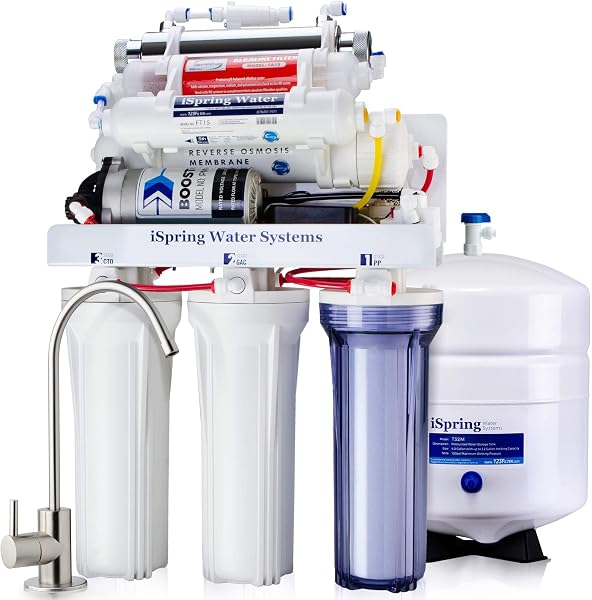
iSpring RCC1UP-AK — 100 GPD with Booster Pump
Wells often have lower or fluctuating pressure than city lines, and RO needs pressure to work well. This system includes an electric booster pump that solves weak output, plus 100 GPD flow and alkaline remineralization. The highest-rated system in iSpring’s lineup (4.7 stars). Add a UV stage for full well protection. ~$345.
Check Price on Amazon →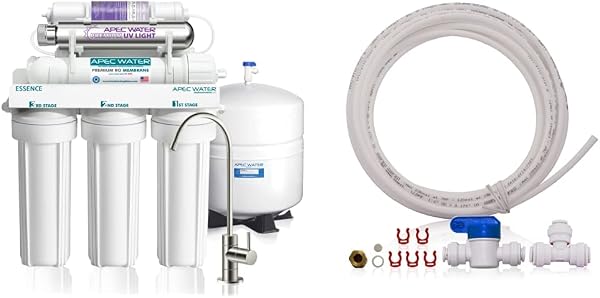
APEC ROES-PHUV75 — Alkaline + UV, US-Assembled
For buyers who want the brand reputation: APEC’s alkaline-plus-UV system, US-assembled with the build quality and support APEC is known for. UV stage for well-water bacteria, NSF 58 & 372 certified. ~$323. See our APEC review.
Check Price on Amazon →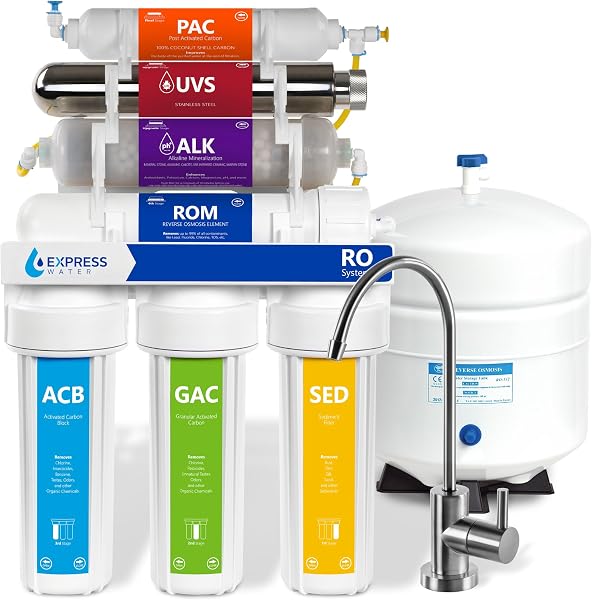
Express Water ROALKUV10M — 11-Stage Alkaline + UV, 100 GPD
The budget-friendly way to get UV and alkaline together, with a 100 GPD membrane. 11 stages, NSF/ANSI 372 certified, 1,900+ reviews. The value pick for well owners who want UV without paying premium-brand prices. ~$270. Part of the Express Water lineup.
Check Price on Amazon →TL;DR: Well water needs more from an RO system than city water does — chiefly UV sterilization for bacteria, since wells aren’t chlorinated. For most wells, the iSpring RCC7AK-UV (~$266) is the best pick: proven, alkaline, and UV-equipped. If your well pressure is low, the iSpring RCC1UP-AK adds a booster pump. Want brand reputation? The APEC ROES-PHUV75. On a budget? The Express Water ROALKUV10M. Critical caveat: a point-of-use RO system treats your drinking water, but it doesn’t replace the upstream treatment (sediment, iron, sometimes a softener) that protects the membrane and handles whole-house well problems — more on that below.
Why Well Water Is Different
If you’re on a private well, three things separate your situation from a city water home, and they shape which RO system you should buy:
1. No chlorination = bacteria risk. Municipal water is disinfected before it reaches you; well water isn’t. A standard RO membrane reduces bacteria but is not a certified microbiological barrier — some organisms can pass or colonize downstream. That’s why a UV sterilization stage is the single most important feature for well water. UV light deactivates bacteria and viruses as the water passes through, closing the gap. Every top pick above includes UV (or can add it).
2. Variable, often low pressure. Wells run on a pump and pressure tank, and pressure can be lower or more variable than a city line. RO depends on pressure to push water through the membrane efficiently. If your household pressure is under ~50 psi, a booster pump (like the RCC1UP-AK’s) restores strong output and reduces waste.
3. Sediment, iron, and hardness that wear out membranes. This is the part well owners most often miss. Wells commonly carry sediment, dissolved iron, manganese, and hardness that foul and destroy RO membranes far faster than clean city water. An RO system alone isn’t a complete well-water solution — it needs upstream protection.
The Pre-Treatment Reality (Don’t Skip This)
A point-of-use RO system at your kitchen sink purifies your drinking water beautifully — but on a problem well, it can clog or fail prematurely without help upstream. Depending on your water test, you may need:
- A sediment pre-filter (whole-house) to stop sand and grit before they reach the RO.
- An iron/manganese filter if your water stains fixtures orange/brown — iron fouls RO membranes quickly.
- A water softener if your water is very hard, to protect the membrane and your whole plumbing system.
- Shock chlorination or whole-house UV if bacteria are a whole-house concern, not just at the drinking tap.
The practical approach: test your well first (a lab test tells you exactly what you’re dealing with), treat the whole-house problems upstream, then let the RO system handle final drinking-water purification. We cover whole-house treatment in our whole house RO guide, and well-specific filtration is the focus of our upcoming well-water series.
How to Choose Your Well-Water RO System
- Test your well water. A lab test (mail-in services like Tap Score, or your county extension office) is step one — it tells you whether you have bacteria, iron, high TDS, or hardness, which determines what you actually need.
- Get UV. For any well, prioritize a UV-equipped system or one you can add UV to. This is non-negotiable for unchlorinated water.
- Check your pressure. If it’s low or fluctuating, choose a booster-pump system.
- Protect the membrane upstream. Add sediment/iron pre-treatment or a softener if your test calls for it, so your RO investment lasts.
- Match the brand to your priorities — value (Express Water), reputation (APEC), or proven popularity (iSpring).
Comparison Table
| System | UV? | Booster Pump? | Alkaline? | GPD | Price |
|---|---|---|---|---|---|
| iSpring RCC7AK-UV | Yes | No | Yes | 75 | $266 |
| iSpring RCC1UP-AK | Add-on | Yes | Yes | 100 | $345 |
| APEC ROES-PHUV75 | Yes | No | Yes | 75 | $323 |
| Express Water ROALKUV10M | Yes | No | Yes | 100 | $270 |
What to Test Your Well Water For
Before buying anything, a lab test tells you what you’re actually dealing with. For a private well, test for:
| Test | Why it matters | If present |
|---|---|---|
| Coliform bacteria / E. coli | Wells aren’t disinfected | Get UV; shock-chlorinate the well |
| Nitrates | Common near agriculture; dangerous for infants | RO removes them |
| Iron & manganese | Stain fixtures; foul RO membranes | Treat upstream before RO |
| Hardness (calcium/magnesium) | Scales pipes and shortens membrane life | Consider a softener |
| pH | Acidic water corrodes plumbing | May need neutralizer |
| Arsenic | Naturally occurs in some groundwater | RO removes it |
| TDS | Overall dissolved-solid load | High TDS shortens membrane life |
| Fluoride | Some wells run naturally high | RO removes it |
Mail-in services (like Tap Score or your county extension office) run a full panel for $50-$200. The results tell you whether you need just a UV-RO system, or upstream iron/sediment/softening too. Testing first is the single best money-saver for well owners — it stops you buying the wrong equipment.
FAQ
Is reverse osmosis good for well water?
Yes — RO is one of the best ways to purify well water for drinking, removing dissolved solids, heavy metals, nitrates, and more. But for a well you should choose a UV-equipped system (wells aren’t chlorinated, and UV handles the bacteria RO alone can miss), and you may need upstream sediment/iron treatment to protect the membrane. RO handles your drinking water; whole-house problems need whole-house treatment.
Do I need UV with reverse osmosis for well water?
For well water, yes — strongly recommended. A standard RO membrane isn’t a certified barrier against bacteria and viruses, and well water has no disinfection. A UV stage deactivates microorganisms as water passes through. On chlorinated city water, UV is usually unnecessary; on a well, it’s the most important feature.
Will reverse osmosis remove iron and sulfur from well water?
RO removes some, but it’s the wrong primary tool for high iron or sulfur — those should be handled by dedicated upstream filters, because iron especially fouls and ruins RO membranes quickly. If your water stains fixtures or smells of rotten eggs, treat iron/sulfur before the RO system. Test your water to know your levels.
What if my well water pressure is low?
Choose an RO system with a booster pump, like the iSpring RCC1UP-AK. RO needs adequate pressure (ideally 50+ psi) to produce water efficiently and minimize waste; a booster pump compensates for the lower or fluctuating pressure common on wells.
Should I test my well water before buying an RO system?
Absolutely. A lab test (mail-in or via your county extension office) tells you whether you have bacteria, iron, manganese, hardness, nitrates, or high TDS — which determines whether you need UV, a booster pump, upstream iron treatment, or a softener. Buying blind risks getting a system that clogs or doesn’t address your actual problem.
Can one RO system treat my whole house’s well water?
A standard point-of-use RO system treats one tap (usually the kitchen). Whole-house RO exists but is a much larger, more expensive category and still usually needs well pre-treatment. For most well owners, the right setup is whole-house treatment for sediment/iron/bacteria plus a point-of-use RO for drinking water. See our whole house RO guide.
How often should I test my well water?
At minimum once a year for bacteria and nitrates, and a fuller panel every few years or whenever you notice a change in taste, smell, color, or after flooding or nearby construction. Wells aren’t monitored by a utility, so you’re responsible for testing — it’s how you catch problems before they reach your glass or damage your equipment.
Can reverse osmosis make well water safe to drink?
For drinking water, a UV-equipped RO system handles most contaminants — dissolved solids, metals, nitrates — plus the bacteria the UV stage deactivates. But “safe” depends on your specific water: high iron, sediment, or heavy bacterial contamination need upstream treatment too. Test first, treat whole-house problems at the point of entry, and let the UV-RO finish the job at the tap.
Bottom Line
The best reverse osmosis system for well water is one built for the realities of a well: UV sterilization for bacteria, a booster pump if your pressure is low, and a recognition that the RO works best behind upstream treatment for sediment and iron. For most wells, the iSpring RCC7AK-UV (~$266) is the right pick; add booster pressure with the RCC1UP-AK, choose the APEC ROES-PHUV75 for brand reputation, or save with the Express Water ROALKUV10M. Above all: test your well first, so you treat what you actually have.
Keep Reading
- Best Whole House Reverse Osmosis Systems — for whole-home well treatment
- Best Reverse Osmosis Systems for Home — the full under-sink field
- iSpring Review — the RCC7AK-UV and booster-pump models in depth
- What Is Reverse Osmosis Water? — why UV complements RO
- How to Install a Reverse Osmosis System — setup, including UV systems
- RO System Maintenance Schedule — UV lamps need annual replacement