
Best Reverse Osmosis Systems for Home in 2026 (Compared)
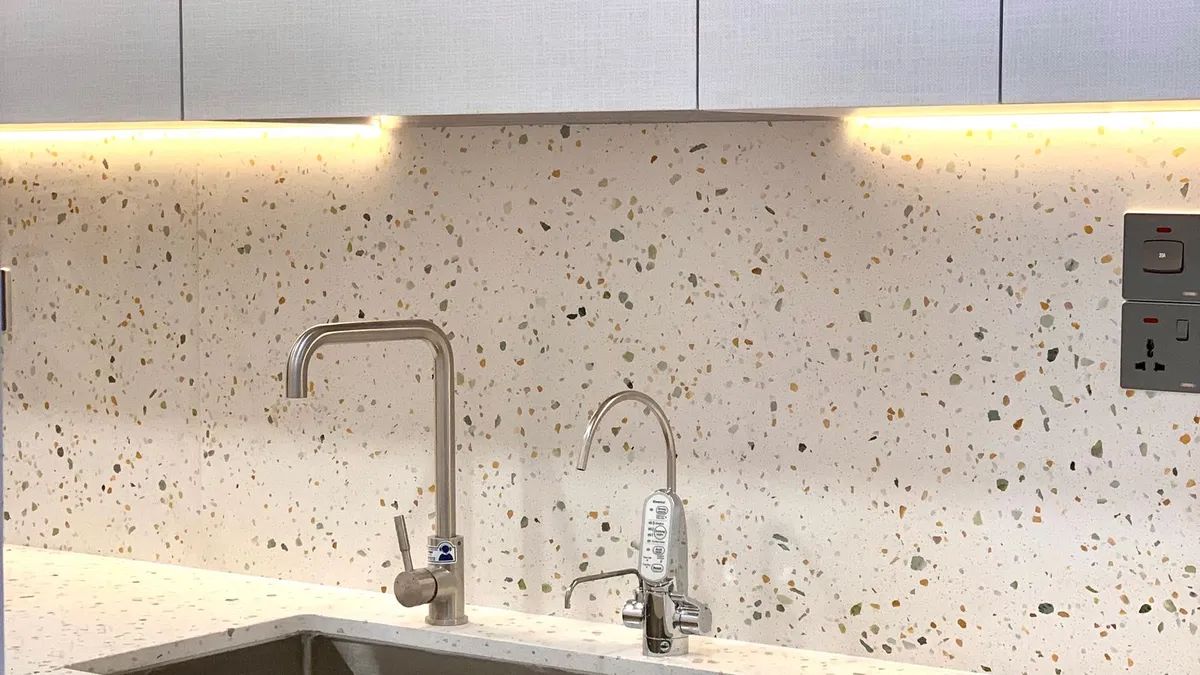
PureFlow Lab is reader-supported. We may earn a commission when you buy through links in this guide, at no extra cost to you. As an Amazon Associate, we earn from qualifying purchases. See our Disclosure for details.
Specs and certifications are as stated on each product’s Amazon listing (checked September 30, 2026); we don’t lab-test products. Check Amazon for current prices.
The gist: For most homeowners, the Waterdrop G3P600 is the best fit: tankless design saves cabinet space, 600 GPD is more than a family needs, the pure-to-drain ratio is 2:1, and the listing shows NSF/ANSI 58 and 372 certification. If you want more, the G3P800 adds 200 GPD, a 3:1 ratio, and NSF/ANSI 53 on its certification list. If you prefer a traditional tank-based system, the APEC ROES-50X is a plain 5-stage design with an extra filter set, and the Express Water 5-Stage RO includes a leak detector and extra filters. Renters and apartment dwellers should look at the AquaTru Classic countertop unit, which needs no plumbing. If you want RO water at every tap (beyond the kitchen), see our whole house reverse osmosis systems guide instead; that’s a different product category entirely.
If you’ve decided you want reverse osmosis drinking water, the next question is which system. The category is bigger than it looks. You’ve got traditional tank-based 5-stage systems that have been around forever, newer tankless units that save cabinet space, countertop units that need zero plumbing, and alkaline-remineralization systems that put minerals back in after the RO strips them out. Different setups solve different problems.
This guide cuts through it. We cover six systems across those categories, what to actually look for when comparing, and which one fits your situation.
How We Picked
This isn’t a paid-placement roundup, and we don’t lab-test products. We compared what each maker states on its current Amazon listing: output (GPD), number of stages, pure-to-drain ratio, tank or tankless, and which NSF/ANSI standards (if any) the listing names and who certified them. Then we matched each design to the household it suits. Where a listing doesn’t state something, we say so rather than guess.
Where systems are functionally similar (the Waterdrop G3P800 and G3P600 are both tankless Waterdrop G3 models at different capacities), we explain the tradeoff rather than picking one arbitrarily. Where a pick has obvious downsides, we say so up front.
Our Picks in Detail
Best Overall: Waterdrop G3P800 (800 GPD Tankless Smart RO)

Waterdrop G3P800 (800 GPD Tankless)
The pick if you want the highest listed output and the widest certification list among our under-sink picks. 800 GPD, tankless (no storage tank under the sink), 10-stage, 3:1 pure-to-drain ratio, smart faucet with a TDS display. The listing says it’s certified by IAPMO R&T to NSF/ANSI 58, 42, 53 and 372.
Check Price on Amazon →The Waterdrop G3P800 is the system to buy if budget isn’t the constraint. Tankless design eliminates the bulky storage tank that eats cabinet space on traditional RO systems. 800 GPD is far above legacy 50-75 GPD systems, so you’re not waiting for a tank to refill. It’s a 10-stage system with a 3:1 pure-to-drain ratio, and the smart faucet shows TDS.
Certifications, from the listing: certified by IAPMO R&T to NSF/ANSI 58 (TDS), 42, 53, and 372 (lead-free materials). That covers all four of the standards we explain below.
Pros: Highest listed output among our picks, NSF/ANSI 42, 53, 58 and 372 certification, 3:1 pure-to-drain ratio, tankless saves cabinet space, TDS display on the faucet. Cons: 800 GPD is more than most households need. Waterdrop says install needs two holes drilled (faucet and drain). The listing doesn’t mention leak detection.
Our Pick for Most Homes: Waterdrop G3P600 (600 GPD Tankless, 8-Stage)
Waterdrop G3P600 (600 GPD, 8-Stage)
The right pick for most homeowners. 600 GPD tankless, 8-stage, 2:1 pure-to-drain ratio, smart faucet that shows TDS and filter life. Waterdrop lists NSF/ANSI 58 (TDS) and 372 (lead-free) certification, and says it’s “tested and certified against NSF 42.” Needs an electrical outlet under the sink.
Check Price on Amazon →The Waterdrop G3P600 is the pick we’d recommend to most homeowners. It’s tankless like the G3P800, with a smart faucet that shows TDS and filter life. The differences, per the two listings: 600 GPD vs 800 GPD, 8 stages vs 10, a 2:1 pure-to-drain ratio vs 3:1, and a shorter certification list. The G3P600 is certified to NSF/ANSI 58 (TDS) and 372 (lead-free), and “tested and certified against NSF 42” (chlorine, taste, odor); its listing does not claim NSF/ANSI 53.
600 GPD is more capacity than a normal family will use. The 2:1 ratio means two gallons of pure water for every gallon sent to drain. The unit needs an electrical outlet under the sink and measures 18.12" x 5.67" x 17.72" (L x W x H) according to Waterdrop, so measure your cabinet. Check Amazon for the current price difference between the two G3 models.
Pros: Tankless saves cabinet space, 600 GPD, 2:1 pure-to-drain ratio, smart faucet shows TDS and filter life, certified to NSF/ANSI 58 and 372. Cons: No NSF/ANSI 53 claim on the listing (the G3P800 has one). Needs under-sink electricity. The listing doesn’t mention leak detection.
Best with Alkaline Remineralization: iSpring RCC7AK
iSpring RCC7AK (6-Stage Alkaline RO)
The pick if you want minerals added back after the RO membrane. 6-stage tank-based system with an alkaline remineralization stage, 75 GPD, and iSpring says the whole system is certified to NSF/ANSI 58. Its top-mounted faucet installs from above.
Check Price on Amazon →The honest issue with reverse osmosis water is that it’s stripped of minerals along with the contaminants. Some people don’t mind. Some people notice that RO water tastes “flat” compared to bottled spring water. If you fall into the second camp, the iSpring RCC7AK is built to address it.
The RCC7AK is a 6-stage system that adds an alkaline remineralization stage after the RO membrane, which puts some minerals back into the water. iSpring lists it as a 75 GPD, tank-based system certified to NSF/ANSI 58 as a whole system, with a top-mounted faucet that installs from above. iSpring sells replacement sets on different schedules: F4AK (6-month), F9K (1-year), F19K75 (2-year) and F28K75 (3-year).
Pros: Built-in alkaline remineralization stage, whole system certified to NSF/ANSI 58, faucet installs from above, several replacement-set schedules to choose from. Cons: Traditional tank-based design (no tankless space savings). 75 GPD is lower than the Waterdrop tankless units. The alkaline stage is one more cartridge to replace.
Best Traditional 5-Stage: APEC ROES-50X
APEC ROES-50X (5-Stage Classic + Extra Filter Set)
A plain, tank-based 5-stage system: 50 GPD, brushed-nickel faucet, quick-connect fittings. This “X” listing is the ROES-50 plus an extra filter set. APEC says it has been in business for 20+ years. Note: the listing makes no NSF certification claim.
Check Price on Amazon →If you don’t need tankless, smart, or alkaline and just want a plain RO system, the APEC ROES-50X is the right pick. It’s the standard APEC ROES-50 sold with an extra filter set. APEC says it has been in business for more than 20 years. The replacement filter set is the FILTER-MAX-ES50, and APEC says to replace filters every 6 to 24 months.
5-stage filtration, 50 GPD, a traditional storage tank, a brushed-nickel faucet and quick-connect fittings, the listing says. Tank-based systems have some advantages over tankless: they typically cost less upfront, and they don’t need an electrical outlet under the sink.
Pros: Simple 5-stage design, extra filter set included, no electricity needed, quick-connect fittings. Cons: The listing makes no NSF certification claim for this model. Takes more cabinet space due to the storage tank. 50 GPD means slower refill if you use a lot of water in a short period. Not as feature-rich as newer Waterdrop systems.
Best 5-Stage Kit with Leak Detector: Express Water 5-Stage RO
The Express Water 5-Stage RO is a traditional tank-based kit that ships with two things most basic systems don’t: an extra filter set and a leak detector. The listing title says “NSF Certified” but doesn’t name which standard, so check with Express Water if a specific certification matters to you.
5-stage filtration, 50 GPD, a 3.2-gallon tank, and a chrome faucet; no electricity required. On paper it’s similar to the APEC ROES-50X, and both come with an extra filter set. The Express Water kit adds the leak detector; the APEC gives you brushed nickel instead of chrome.
Pros: Leak detector and extra filter set included, 3.2-gallon tank, no electricity needed. Cons: The “NSF Certified” claim doesn’t name a standard. Tank takes cabinet space. No frills, no smart features.
Best Countertop / No Plumbing: AquaTru Classic
AquaTru Classic (Countertop RO)
The right pick for renters, apartment dwellers, or anyone who doesn’t want to plumb an under-sink system. Sits on your counter and needs no plumbing. Tested and certified by IAPMO to NSF/ANSI 42, 53, 58, 401 and P473, covering 84 contaminants including PFOA/PFOS and microplastics, according to the listing.
Check Price on Amazon →The AquaTru Classic is the answer if you can’t or don’t want to install an under-sink system. Renters, apartment dwellers, RV owners, anyone in a temporary living situation: this is the right call. It sits on your countertop and needs no plumbing: you fill it from your tap.
AquaTru says it’s tested and certified by IAPMO to NSF/ANSI 42, 53, 58, 401 and P473, covering 84 contaminants including PFOA/PFOS and microplastics. Filters last 600 to 1,200 gallons (6 months to 2 years). Capacity per fill is smaller than an under-sink system’s tank, but for drinking water that’s often enough.
Pros: No plumbing required, moves with you, the widest certification list of our picks (NSF/ANSI 42, 53, 58, 401, P473), PFOA/PFOS and microplastics named in its contaminant list. Cons: Needs to be refilled by hand from the tap, and takes counter space.
What to Look For in a Reverse Osmosis System
If you’re comparing systems beyond this list, this is how we’d decide.
Stages and What They Do
Most under-sink RO systems are described as “5-stage” or “8-stage.” The number refers to filter cartridges in series, not necessarily quality. The standard stages:
- Sediment filter: catches sand, rust, scale before they reach the membrane
- Carbon block: removes chlorine (which destroys the RO membrane), taste, odor
- Carbon polish: finer carbon for additional taste/chemical removal
- RO membrane: the actual reverse osmosis step (the heart of the system)
- Post-carbon: final polish before the faucet
- Optional: alkaline / remineralization: adds minerals back after RO
- Optional: UV sterilization: kills bacteria (most useful for well water)
- Optional: TDS reduction stage: extra polish for very high TDS sources
More stages isn’t automatically better. What matters is that the stages that are present are the right ones for your water. For city water, 5 stages is plenty. For well water with bacteria concerns, UV is worth adding. For people who don’t like flat-tasting RO water, alkaline remineralization solves it.
Tankless vs Tank-Based
Tankless RO systems (like the Waterdrop G3P800 and G3P600) produce water on demand. Pros: no bulky storage tank, no tank to sanitize, much higher rated output. Cons: usually cost more upfront and need an electrical outlet under the sink.
Tank-based RO systems (like the APEC ROES-50X, Express Water 5-Stage RO, iSpring RCC7AK) store treated water in a pressurized tank under the sink. Pros: usually cost less upfront, no electrical required. Cons: storage tank takes cabinet space, the tank needs periodic sanitizing, slower refill if you use a lot of water.
If cabinet space is tight, tankless is usually the deciding factor.
GPD Ratings
GPD (gallons per day) is the rated production capacity of the RO membrane. For under-sink drinking-water-only use:
- 50 GPD: Fine for 1-2 person households, modest water use
- 75-100 GPD: Good for 3-4 person households
- 400-600 GPD: Tankless systems, basically unlimited for any household
- 800 GPD: Premium tankless, complete overkill for residential drinking water
Higher GPD mainly buys speed. It doesn’t tell you how well a system removes a given contaminant; the certification list does that.
Wastewater Ratio
RO systems produce both treated water and wastewater (water rejected by the membrane). The ratio is expressed as “X:1 pure-to-drain,” so a 2:1 system makes 2 gallons of pure water for every gallon sent down the drain.
Older tank-based designs often send more water to drain than they produce, and many basic listings don’t state a ratio at all. Newer tankless systems list 2:1 or 3:1: the Waterdrop G3P600 is 2:1 and the G3P800 is 3:1, per their listings.
Wastewater ratio matters if you’re on a well or have water billing. Over a year, a more efficient system can save a lot of water. For most municipal water users it’s a minor consideration.
NSF Certifications
The certifications that actually matter for an RO system:
- NSF/ANSI 42: aesthetic claims such as chlorine, taste and odor reduction
- NSF/ANSI 53: health-related reduction claims (for example lead, VOCs, cysts), each certified contaminant by contaminant
- NSF/ANSI 58: the RO standard: TDS reduction, plus optional, separately listed claims such as fluoride, arsenic or nitrate
- NSF/ANSI 372: the lead content of the materials that touch water. It is not a lead-reduction claim; for that, look for lead listed under 53 or 58.
A standard number on its own doesn’t mean a system removes everything that standard can cover. Each certification lists specific contaminants for a specific model. Also keep three things apart: certified by an accredited body (NSF, IAPMO, WQA and others), merely “tested to” a standard by the seller, and component certification (one filter or the membrane) versus the whole system. The certifier’s online listing for the exact model is the final word; see NSF’s contaminant claims guide.
Check which standards a listing actually names, and who certified the product. “NSF certified” with no standard named tells you little. Among our picks, the G3P800 and AquaTru Classic list the most standards; the G3P600 and iSpring RCC7AK list NSF/ANSI 58; the Express Water kit says “NSF Certified” without naming a standard; and the APEC ROES-50X listing makes no NSF claim.
Faucet Style
A surprisingly important detail. RO systems include a dedicated faucet for the treated water (separate from your main sink faucet). Older systems use a basic chrome lever; newer systems offer brushed nickel, matte black, and the Waterdrop “smart” faucets with built-in LED status indicators and TDS displays.
Faucet style matters because it’s the most visible part of the install and the only thing your guests will see. If your kitchen is going to be photographed for real estate purposes, the upgraded faucet styles are worth it.
What an RO System Actually Costs
The sticker price is just the start. Prices change often, so check each listing for the current figure, then think about the cost of ownership:
System type: Tankless units and countertop units usually cost more upfront than basic tank-based 5-stage systems. Extra stages (alkaline, UV) and smart faucets add to the price.
Installation: Under-sink systems are DIY-friendly if you’re moderately handy. If you hire a plumber, get at least two quotes; cost varies with plumbing access and if you need a hole drilled in stone. Countertop units need no installation.
Filter replacements: This is the recurring cost. Check the replacement schedule and filter part numbers before you buy. For example, iSpring sells RCC7AK sets on 6-month (F4AK), 1-year (F9K), 2-year (F19K75) and 3-year (F28K75) schedules, and AquaTru says its Classic filters last 600 to 1,200 gallons (6 months to 2 years). Price the replacement set on Amazon and multiply by how many you’ll need over five years.
Membrane replacement: The RO membrane lasts longer than the pre-filters, but it will eventually need replacing too. It’s usually the most expensive single cartridge.
Installation Difficulty (Honest Take)
Under-sink RO installation is DIY-friendly if you’re moderately handy. The process:
- Shut off cold water supply at the angle stop under the sink
- Install a T-fitting on the cold water line for the RO feed
- Drill a hole in your sink (or use an existing sprayer hole) for the RO faucet
- Drill a small hole in the drain line for the wastewater connection (using a kit-provided saddle clamp)
- Mount the filter housing to the cabinet wall
- Connect tubing (tankless systems also need a 110V outlet)
- Flush the system for 1-2 hours before drinking
Total time: 1-2 hours for a first install. Stainless steel sinks need a stepped drill bit for the faucet hole. Granite/quartz countertops require a diamond hole saw. At that point, consider paying a plumber.
Common DIY mistakes: forgetting to flush the system before drinking (initial water tastes terrible), under-tightening fittings (slow leaks), and installing the drain saddle clamp on the wrong section of drain pipe (above the trap, not below).
Maintenance and Filter Replacement
| Component | Replacement Interval | Why It Matters |
|---|---|---|
| Sediment filter | 6-12 months | Catches sediment before it reaches the membrane |
| Carbon pre-filter | 6-12 months | Removes chlorine, which damages RO membranes |
| Carbon post-filter | 12 months | Final polish before the faucet |
| RO membrane | 2-5 years | Does the actual RO work; usually the priciest cartridge |
| Alkaline cartridge (if applicable) | 12 months | Only on systems with a remineralization stage |
| System sanitization | Annually | Mainly for tank-based systems |
Set a recurring calendar reminder for filter changes, and follow the maker’s schedule for your model. The pre-filters protect the RO membrane; neglect them and the membrane wears out much sooner.
Many tankless systems use quick-change cartridges that twist or push in; Waterdrop and iSpring both describe filter swaps that need no tools. Traditional tank-based designs use screw-on housings, so you shut off the water and unscrew each housing to change filters.
Comparison Table
All specs per each product’s Amazon listing (checked September 30, 2026). “Not stated” means the listing doesn’t say.
| System | Type | GPD | Stages | Pure-to-Drain | NSF/ANSI Standards (per listing) | Tank | Price |
|---|---|---|---|---|---|---|---|
| Waterdrop G3P800 | Tankless | 800 | 10 | 3:1 | 42/53/58/372 (IAPMO R&T) | None | Check price |
| Waterdrop G3P600 | Tankless | 600 | 8 | 2:1 | 58/372; tested and certified against 42 | None | Check price |
| iSpring RCC7AK | Tank | 75 | 6 | Not stated | 58 (whole system) | Yes | Check price |
| APEC ROES-50X | Tank | 50 | 5 | Not stated | None claimed | Yes | Check price |
| Express Water 5-Stage RO | Tank | 50 | 5 | Not stated | “NSF Certified” (standard not named) | 3.2 gal | Check price |
| AquaTru Classic | Countertop | n/a | Not stated | n/a | 42/53/58/401/P473 (IAPMO) | Countertop reservoir | Check price |
Which RO System for Your Situation
| Your Situation | Right Pick | Why |
|---|---|---|
| You own your home and want the most capacity and the longest certification list | Waterdrop G3P800 | Highest listed output, 3:1 pure-to-drain, NSF/ANSI 42, 53, 58 and 372 listed |
| You own your home and want tankless RO without the top-end capacity | Waterdrop G3P600 | Tankless, 600 GPD, 2:1, NSF/ANSI 58 and 372 listed; plenty for most homes |
| You don’t like the flat taste of RO water | iSpring RCC7AK | Built-in alkaline remineralization stage adds minerals back after RO |
| You want a plain tank-based system without extras | APEC ROES-50X | Simple 5-stage design with an extra filter set included; no electricity needed |
| You want a basic tank system with a leak detector in the box | Express Water 5-Stage RO | Listing includes a leak detector and extra filter set |
| You rent, live in an apartment, or move often | AquaTru Classic | No plumbing, no install, takes with you when you move |
| You want RO water at every tap in the house | See our whole house RO systems guide | This is a different product category. Under-sink RO is drinking water only |
| You have well water with iron/sulfur/bacteria | Treat the well water first, then add any system above | Iron, sulfur and sediment in untreated well water can foul RO membranes. See our well water RO guide |
Filter Schedule, Footprint and Who Should Skip Each Pick
Two systems with the same stage count can cost very different amounts to run. This table is the part of the comparison the listings bury: how often each maker says to change what, how much cabinet it takes, and the one situation where each pick is the wrong buy.
| System | Filter schedule (maker) | Listed footprint | Certifications claimed | Skip it if |
|---|---|---|---|---|
| Waterdrop G3P800 (tankless) | Pre-filters: CF 6 months Membrane: RO 24 months (G3 series, per Waterdrop) Post / remineralization: CB 12 months | Tankless; needs an outlet under the sink. Size not stated in the listing (the G3P600 is 18.1 x 5.7 x 17.7 in) | NSF/ANSI 42, 53, 58, 372 (IAPMO R&T, per listing) | You have no power under the sink, or you want water during an outage (tankless units stop without electricity) |
| Waterdrop G3P600 (tankless) | Pre-filters: CF 6 months or 550 gal Membrane: RO 24 months or 2,200 gal Post / remineralization: CB 12 months or 1,100 gal | 18.12 x 5.67 x 17.72 in (listing); tankless | NSF/ANSI 58, 372; tested against 42 (per listing) | Same as above; also if you want remineralization, which needs an add-on inline filter |
| iSpring RCC7AK (tank) | Pre-filters: FP15 sediment, FG15 and FC15 carbon: 6 to 12 months Membrane: MC7: 2 to 3 years Post / remineralization: FT15 post-carbon and FA15 alkaline: 6 to 12 months (sets: F4AK 6-month, F9K 1-year, F19K75 2-year, F28K75 3-year) | 15.5 x 5.1 x 19.0 in (iSpring) plus a storage tank | NSF/ANSI 58 (whole system, per iSpring); 372 per listing | Your cabinet cannot fit a tank, or you want more than 75 GPD |
| APEC ROES-50X (tank) | Pre-filters: FILTER-SET-ES stages 1 to 3: 6 to 12 months Membrane: MEM-ES-50: 2 to 4 years Post / remineralization: FI-ES-TCR-QC carbon: 2 to 4 years | Not stated in the listing; standard 10-inch housings plus a tank | NSF/ANSI 58, 372 (per listing) | A household of five or more (50 GPD refills slowly), or you want minerals added back |
| AquaTru Classic (countertop) | Pre-filters: Filters last 6 months to 2 years, 600 to 1,200 gallons (per listing) Membrane: Included in the filter set schedule Post / remineralization: Included; no remineralization | Countertop, no plumbing; 0.75-gal clean tank (AquaTru) | NSF/ANSI 42, 53, 58, 401, P473 by IAPMO (per listing) | You want it out of sight under the sink, or more than a few gallons a day |
| Express Water 5-stage (tank) | Pre-filters: Not stated in the listing (Express Water's countertop guidance: carbon stages 6 months) Membrane: Not stated (countertop guidance: up to 24 months) Post / remineralization: Not stated | Not stated; standard housings plus a tank | "NSF certified" in the listing title; Express Water names its RO5DX and RO10DX as NSF certified | You want the filter schedule in writing before you buy; ask the seller which model number ships |
Intervals are the makers' own schedules (listing or maker site, checked October 21, 2026); hard water, sediment and heavy use shorten them. "Not stated" means the listing gives no figure, so budget on the most conservative interval in the column.
Where to Buy Our Picks
Express Water 5-Stage RO with Leak Detector & Extra Filters
A tank-based 5-stage kit that comes with extras: the listing includes an extra filter set and a leak detector. 50 GPD, 3.2-gallon tank, chrome faucet, no electricity required. The listing title says “NSF Certified” but doesn’t name the standard.
Check Price on Amazon →FAQ
Is reverse osmosis water safe to drink?
RO is a widely used drinking-water treatment. The main concern critics raise is mineral content: RO removes calcium, magnesium, and other minerals along with contaminants. If that concerns you, get a system with a remineralization stage (like the iSpring RCC7AK) that adds minerals back after the RO membrane. We cover the question in more depth in Is Reverse Osmosis Water Good for You?
How long does an RO membrane last?
It depends on your water and on keeping the pre-filters current; follow the maker’s schedule for your model (iSpring’s RO500AK membrane, for example, is rated for 24 months). Chlorine damages RO membranes, so if you’re on city water and the carbon pre-filters are spent, the membrane wears out early.
Does RO remove fluoride?
Yes. Fluoride is one of the dissolved ions an RO membrane rejects. If fluoride is your main concern, check whether the specific system’s certification includes a fluoride-reduction claim. See our fluoride guide.
Does RO remove PFAS / “forever chemicals”?
RO can reduce PFAS, but don’t assume every RO system is certified for it. An NSF/ANSI 58 certification alone doesn’t mean a system was certified for PFOA/PFOS reduction; look for PFOA/PFOS in the certified-contaminant list. Of our picks, the AquaTru Classic’s listing names PFOA/PFOS among its 84 contaminants certified by IAPMO.
What’s the difference between a tankless and tank-based RO system?
Tankless systems produce water on demand and skip the storage tank entirely: saves cabinet space, no tank to sanitize, much higher rated output. Tank-based systems store treated water in a pressurized tank: usually cheaper upfront and no electrical needed. Both work; the choice comes down to budget and how much you value cabinet space.
Can I install an RO system myself?
Yes, if you’re moderately handy. Plan 1-2 hours for a first install. The trickiest part is drilling a hole in your sink for the dedicated RO faucet. Stainless sinks need a stepped drill bit. Granite and quartz countertops need a diamond hole saw, so consider paying a plumber for that.
Do RO systems waste a lot of water?
Older tank-based designs often send more water to drain than they produce. Newer tankless systems list much better ratios: 2:1 for the Waterdrop G3P600 and 3:1 for the G3P800, per their listings. If wastewater is a concern, lean toward tankless and check the listed ratio.
Will RO work with low water pressure?
Tank-based RO needs enough feed pressure to work well; APEC, for example, lists 40 to 85 psi for its ROES-PH75. Below that, output drops. Options are a system with a permeate pump (the APEC RO-PERM listing says its pump fills the tank 2 to 3x faster and cuts wastewater by up to 80%) or one with a booster pump. Tankless units like the Waterdrop G3P600 run on electricity (its listing says it needs an outlet under the sink); check the listing’s pressure range before buying.
Bottom Line: Which RO System Should You Buy?
Most homeowners should get the Waterdrop G3P600. Tankless design saves cabinet space, 600 GPD is more than a normal household needs, the ratio is 2:1, and it’s listed as certified to NSF/ANSI 58 and 372.
If budget isn’t a constraint and you want the most capacity, step up to the Waterdrop G3P800 for the additional 200 GPD, a 3:1 ratio, and NSF/ANSI 53 on its certification list.
If you want a traditional tank-based system, the APEC ROES-50X is the plain 5-stage option and the Express Water 5-Stage RO adds a leak detector.
If you don’t like the flat taste of pure RO water, the iSpring RCC7AK with alkaline remineralization is the right pick.
If you can’t install under-sink (rental, apartment, or you just don’t want to), the AquaTru Classic countertop is the answer.
If you want RO water everywhere in the house, you’re in the wrong category. See our whole house reverse osmosis systems guide for that decision.
Ready to buy?
Check current pricing on any of the systems above. Your clicks keep these guides free.
Shop All Reverse Osmosis Systems on Amazon →
If this helped, share it with someone who’s trying to make sense of their water.
Keep Reading
- Does Reverse Osmosis Remove Microplastics? (what RO can and can’t remove)
- Reverse Osmosis Faucets: Air-Gap vs Non-Air-Gap: which faucet you actually need
- Best RO Systems for Well Water: UV and booster-pump picks for wells
- Whole House RO vs Whole House Filter: which one you actually need
- Best Whole House Reverse Osmosis Systems: five whole-house RO options compared
- Whole House RO vs Under-Sink RO: Which Should You Buy? (deeper decision framework if you’re on the fence)
- Whole House RO Cost: What Drives It: pricing breakdown for the bigger setup
- Best Countertop Reverse Osmosis Systems: no-plumbing picks for renters and apartments
- Best Tankless Reverse Osmosis Systems: under-sink RO without the bulky storage tank
- What Is Reverse Osmosis Water? (how RO works and what it removes)
- Is Reverse Osmosis Water Good for You? (the health and minerals question)
- How to Install a Reverse Osmosis System: step-by-step DIY install guide
- Does Reverse Osmosis Remove Fluoride? (how RO handles fluoride (and why standard carbon filters aren’t designed to))
- Waterdrop Reverse Osmosis Review: our full look at the tankless lineup
- APEC Reverse Osmosis Review: the tank-based lineup
- iSpring Reverse Osmosis Review: the alkaline lineup
- Express Water Reverse Osmosis Review: the tank-based kits with leak detectors
- AquaTru Reverse Osmosis Review: the countertop option for renters
- Culligan Reverse Osmosis Review: what to know about the dealer-sold brand
- APEC vs iSpring vs Waterdrop Showdown: three major under-sink brands head-to-head
- RO Replacement Filters: which set fits your system
Primary sources
Check certifications and water-quality rules yourself:
- NSF certified drinking water treatment product listings (search by brand, model or standard)
- EPA: National Primary Drinking Water Regulations (legal limits for public water systems)
- EPA: Find your water utility’s Consumer Confidence Report
- NSF: what each water treatment standard covers (42, 53, 55, 58, 401)
- NSF: NSF/ANSI/CAN 372 lead-content requirements
- NSF: Contaminant reduction claims guide