Whole House RO vs Under-Sink RO: Which Should You Actually Buy?
PureFlow Lab is reader-supported. We may earn a commission when you buy through links in this guide — at no extra cost to you. As an Amazon Associate, we earn from qualifying purchases. See our Disclosure for details.
Top Picks (At a Glance)
If you’ve already made the decision and just want to know what to buy:

US Water Systems Defender Whole House RO
Pre-engineered complete package — pre-filtration, membrane, and pump matched and shipped together. ~$998 direct. Best value pick in the whole-house category for most homes.
If Under-Sink RO is the right call
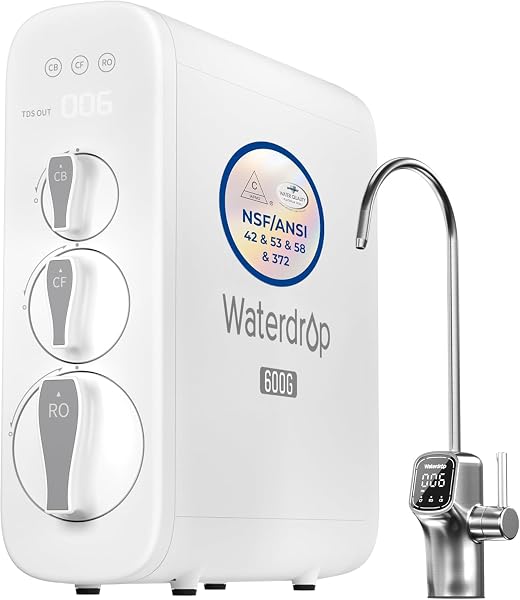
Waterdrop G3P600 — 600 GPD Tankless
The right under-sink RO for most homeowners. Tankless saves cabinet space, NSF-certified across all four relevant standards, 2:1 wastewater ratio. ~$439.
Check Price on Amazon →If you want both — the hybrid setup most homeowners actually need
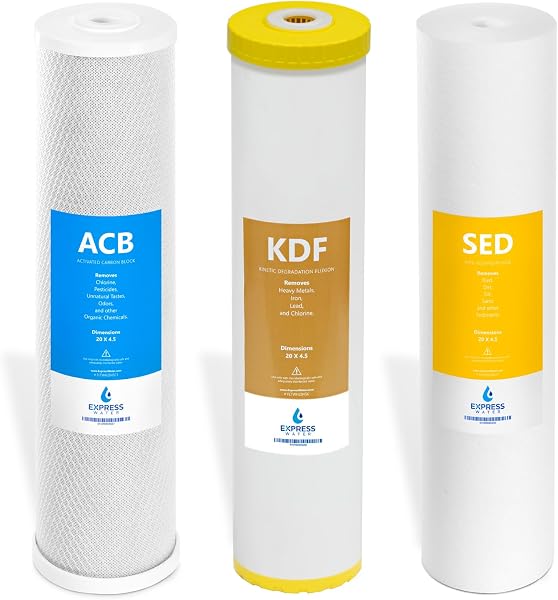
Whole-House Carbon Filter + Under-Sink RO Combo
The honest answer for the majority of buyers searching this comparison: an Express Water 3-stage whole-house filter for showers and laundry (~$187), plus a dedicated under-sink RO for drinking water (~$153). ~$340 combined.
Check the whole house filter → | Check the under-sink RO →
TL;DR: For 80-90% of homeowners, under-sink RO is the right call — it costs $150-$850, takes a couple hours to install, and gives you RO drinking water at the tap that matters most (the kitchen sink). Whole-house RO is the right call for the specific minority with nitrate-contaminated well water, very high TDS municipal water, brackish well water, or a medical requirement for low-mineral water at every fixture. The cost difference is dramatic — under-sink RO runs $150-$850 total, whole-house RO runs $1,000-$8,000+ all-in. If you want better water everywhere in the house but only purified drinking water at one tap, the honest answer is a hybrid: a whole-house carbon filter ($200-$1,200) for the entire home plus a dedicated under-sink RO for drinking — covers 95% of what people actually want at a fraction of the cost of true whole-house RO.
If you’re researching reverse osmosis systems, you’ve probably run into the whole-house vs under-sink question. Both technologies do the same fundamental thing — push water through a semipermeable membrane that rejects dissolved contaminants — but the practical implications are dramatically different.
This article cuts through it. We’ll cover what each system actually does, what each one costs over five years, when each makes sense, and when the hybrid option beats either alone.
What Each System Actually Does
Under-sink RO is a compact unit that installs under your kitchen sink. Water flows through 4-8 filtration stages (pre-filters, RO membrane, post-filters) and dispenses purified water through a dedicated faucet next to your main sink. Treats roughly 50-800 gallons per day. Stays at the point of use — your kitchen sink only.
Whole-house RO is a much larger multi-component system installed at your home’s main water entry point (typically the garage or utility room). Treats every drop of water entering your home — kitchen, bathrooms, showers, laundry, outdoor spigots. Requires not just the RO unit but also pre-filtration, a large atmospheric storage tank (80-550 gallons), and a re-pressurization pump.
The fundamental difference is coverage area. Under-sink treats drinking water. Whole-house treats everything.
This sounds like whole-house is automatically better. It usually isn’t — because the water you actually drink and cook with is a tiny fraction of what your house uses. Most of your home’s water goes to showers, toilets, laundry, irrigation, and dishwashing. None of those uses require RO water. Treating them with RO costs significantly more upfront and creates 1-4 gallons of wastewater for every gallon used.
Side-by-Side Comparison
| Factor | Under-Sink RO | Whole-House RO |
|---|---|---|
| Coverage | Kitchen sink only | Every fixture in the house |
| Typical upfront cost | $150-$850 | $1,000-$8,000+ |
| Installation cost | $0 DIY / $150-$300 pro | $0 DIY / $800-$2,500 pro |
| Installation difficulty | Moderate DIY (1-2 hours) | Plumber + electrician recommended |
| Output capacity | 50-800 GPD | 300-5,000+ GPD |
| Storage tank required | 3-gal tank or tankless | 80-550 gallon atmospheric tank |
| Re-pressurization pump | Not required | Required for whole-house pressure |
| Pre-filtration | Built into the unit | Separate sediment + carbon stages needed |
| Wastewater ratio | 1:1 to 4:1 | 1:1 to 4:1 |
| Annual filter cost | $60-$180 | $200-$400 |
| Membrane lifespan | 2-5 years | 2-5 years |
| Membrane replacement cost | $60-$200 | $200-$800 |
| Space required | Under one sink | 4’x4’ floor area + 7’ vertical |
| Electrical required | Tankless only | Always (booster pump) |
| Best for | Drinking water purity | Specific whole-home contamination |
| Recommended system | Waterdrop G3P600 | US Water Systems Defender |
When Whole-House RO Is the Right Call
Whole-house RO genuinely makes sense in a few specific situations. If you don’t fit one of these, it probably isn’t the right choice for you.
1. You have nitrate-contaminated well water. Nitrates above the EPA limit of 10 mg/L are a serious health concern (especially for infants — “blue baby syndrome”). RO is one of the most effective residential technologies for nitrate removal. If your nitrate problem affects all your water sources, whole-house is justified.
2. Your TDS is extremely high (500+ ppm). Very high dissolved solids affect not just taste but also appliance lifespan (water heaters, dishwashers, ice makers). Whole-house RO is one of the few solutions that treats this at every fixture.
3. You have brackish or borderline-saline water. Some private wells, especially in coastal or geologically unusual areas, have salinity that exceeds palatable levels. RO is the standard residential solution.
4. Someone in your household has a medical requirement. Certain conditions (kidney disease on home dialysis, specific allergies, immunocompromised states) call for ultra-pure water at every fixture, not just the kitchen.
5. You have specific contamination at every-fixture level. This includes well water with arsenic, fluoride above local levels of concern, or certain industrial contaminants where partial treatment isn’t sufficient.
6. You’re building a custom home with the budget for it. If the cost differential isn’t a constraint and you want the highest residential water quality available throughout the home, whole-house RO delivers that.
If none of these apply, under-sink RO + whole-house carbon is almost certainly the better answer.
When Under-Sink RO Is the Right Call
Under-sink RO is the right pick for the vast majority of homeowners who want better drinking water. Specifically:
1. Your main concern is drinking and cooking water. You drink 0.5-2 gallons per person per day. Treating just that water — instead of the 80-100 gallons per person per day your house uses in total — is dramatically more cost-effective.
2. Your tap water is generally safe but tastes bad. Chlorine, hardness, slight mineral content — these are flavor issues, not health issues. Under-sink RO solves the taste problem at the only tap that matters.
3. You have specific drinking-water concerns (fluoride, lead, PFAS). RO removes all of these effectively. An under-sink system at the kitchen sink gives you safe drinking water at $200-$500 instead of $3,000+.
4. You’re a renter or in a temporary living situation. Under-sink RO is removable when you move. AquaTru-style countertop units are even easier — no install at all. Whole-house RO is a permanent property modification.
5. You’re cost-conscious. Even premium under-sink units cost less than the cheapest credible whole-house setup. The five-year cost of ownership is roughly 1/5th of whole-house.
6. You don’t have the space for whole-house equipment. Whole-house RO needs a 4’x4’ floor area plus 7’ vertical clearance, drain access, electrical, and ideally cold-protected space. Most apartments, condos, and smaller houses simply don’t have the right setup.
If you fit any of these, under-sink RO is your answer. See our best reverse osmosis systems guide for specific picks.
The Hybrid Setup Most People Actually Need
Here’s the configuration that almost nobody talks about but works for the majority of buyers researching this comparison:
Whole-house carbon filter + Under-sink RO
The whole-house carbon filter (Express Water 3-stage at $187 or Aquasana Rhino at $1,123) handles the practical concerns that drive most “whole-house RO” searches:
- Chlorine removal at every shower (reduces skin/hair dryness)
- Sediment removal protecting all your fixtures and appliances
- Heavy metal reduction (lead, copper, iron) at every tap
- Better-tasting water for cooking and tooth brushing
- Cleaner laundry (reduces detergent use, prolongs fabric life)
The under-sink RO (Waterdrop G3P600 at $439 or Express Water RO5DX at $153) handles the drinking water purification that whole-house RO would have provided:
- Removes fluoride, nitrates, PFAS, and microscopic contaminants
- Provides RO-quality water for drinking, cooking, and ice
- Delivers the certifications (NSF/ANSI 58) that matter for drinking water
Total cost: $340-$1,560 depending on which components you pick. Coverage: most of what people actually want from whole-house RO. Maintenance: simpler than a true whole-house RO setup. Wastewater impact: dramatically less (you’re only RO-filtering 1-2 gallons per person per day instead of 100+).
The hybrid is the honest answer for probably 80% of the people searching “whole house RO vs under sink RO.” It’s not as glamorous as a full whole-house RO install, but the math is overwhelmingly in its favor.
5-Year Cost Comparison
Sticker price tells you almost nothing about long-term cost. Here’s the honest five-year math:
| Setup | Upfront | Year 1 Total | 5-Year Total | Cost Per Day |
|---|---|---|---|---|
| Under-sink RO budget (Express Water RO5DX) | $153 | $200 | $650 | $0.36 |
| Under-sink RO value (Waterdrop G3P600) | $439 | $530 | $1,100 | $0.60 |
| Under-sink RO premium (Waterdrop G3P800) | $849 | $980 | $1,700 | $0.93 |
| Hybrid: whole-house carbon ($187) + under-sink RO RO5DX ($153) | $340 | $500 | $1,300 | $0.71 |
| Hybrid: Aquasana Rhino + Waterdrop G3P600 | $1,562 | $1,800 | $3,200 | $1.75 |
| Whole-house RO value (US Water Defender) | $998 | $1,400 | $3,800 | $2.08 |
| Whole-house RO with iSpring RCB3P + storage/pump | $1,800 | $2,500 | $5,500 | $3.01 |
| Whole-house RO premium configured (Crystal Quest) + pro install | $7,500 | $9,000 | $13,000 | $7.12 |
The pattern is clear: whole-house RO costs 3-7x as much over five years as the hybrid approach that covers most of the same needs.
Installation Comparison
Under-sink RO installation:
- Time: 1-2 hours for first install, 30-45 minutes after that
- Skill level: Moderate DIY (basic plumbing comfort)
- Tools needed: Drill, adjustable wrench, sometimes a hole saw for sink faucet
- Permanent changes: Drill one hole in your sink for the RO faucet, install a saddle clamp on your drain pipe
- Reversibility: Mostly reversible — you can plug the sink hole and remove the drain clamp
Whole-house RO installation:
- Time: 6-12 hours for DIY, 4-8 hours for a professional crew
- Skill level: Advanced — combines plumbing, electrical, and water-treatment system design
- Tools needed: Pipe-sweating or PEX tools, bypass valve installation, electrical work for the booster pump
- Permanent changes: Cut into your main water line, install bypass valve, electrical outlet for pump, drain line for wastewater
- Reversibility: Major plumbing modifications. Reversing requires another plumber.
The installation differential alone — $0-$300 for under-sink versus $800-$2,500 for whole-house — is often the deciding factor.
Capacity and Performance
Under-sink output: 50-800 GPD depending on system. For drinking and cooking, 50 GPD is more than any family will use (that’s ~6.25 gallons per day, vs typical household drinking use of 1-3 gallons). Tankless under-sink systems (Waterdrop G3P600, G3P800) at 600-800 GPD effectively never run out.
Whole-house output: 300-5,000+ GPD. Required because the system has to treat everything — showers, laundry, dishwashing, irrigation. Even a 4-person household uses 320-400 GPD on average. Whole-house RO systems with insufficient capacity cause everyone to wait for the storage tank to refill before their shower has decent pressure.
Wastewater: Both systems produce wastewater. Modern tankless under-sink units like the Waterdrop G3P600 hit 2:1 (best in residential). Whole-house systems run 1:1 to 4:1 depending on configuration. Over a year, a whole-house RO can send hundreds of thousands of gallons to drain that wouldn’t be wasted with a hybrid setup.
Buyer Scenario Decision Matrix
Stop comparing in the abstract. Match your specific situation:
| Your Situation | Recommendation | Why |
|---|---|---|
| City water, want better drinking water | Under-sink RO (Waterdrop G3P600) | 95% of value at 20% of the cost |
| City water, want better water everywhere but only need pure water for drinking | Hybrid: Express Water 3-stage + under-sink RO | Covers practical concerns at fraction of whole-house cost |
| Well water with mild iron/hardness, want drinking water purity | Treat iron + softener first, then under-sink RO | Pre-treat the well water then point-of-use RO |
| Well water with nitrate above 10 mg/L | Whole-house RO (US Water Defender) | Nitrates affect cooking and bathing water — whole-house solves this |
| Very high TDS (500+ ppm) at every tap | Whole-house RO (Crystal Quest configured) | Only whole-house addresses TDS at every fixture |
| Renter / apartment | Countertop RO (AquaTru) | Zero install, fully portable |
| Building a custom home, budget isn’t tight | Whole-house RO configured to spec | If you’re going to do it, do it right at build time |
| Need to spend the least to get RO drinking water | Under-sink RO (Express Water RO5DX) | Cheapest credible RO system, $153 |
| Skin sensitivity to chlorine in shower water | Whole-house carbon filter — RO is overkill | Carbon handles chlorine at every shower; RO not needed |
FAQ
Is whole house RO better than under-sink RO?
Different products solving different problems. Whole-house treats every fixture; under-sink treats just the kitchen sink. For drinking water purposes, under-sink is better (cheaper, simpler, less wastewater per glass produced). For specific contamination problems that affect every fixture, whole-house is necessary.
Do I need both whole-house and under-sink RO?
Almost never. A hybrid setup (whole-house carbon filter for the house + under-sink RO for drinking) is what most homeowners actually need. Running both whole-house RO and under-sink RO is redundant — whole-house RO already produces purified water at every fixture, so an additional under-sink RO adds cost without benefit.
Why is whole-house RO so much more expensive?
Whole-house RO requires components that under-sink doesn’t: a large atmospheric storage tank ($300-$1,500), a re-pressurization pump to deliver household water pressure ($400-$900), more extensive pre-filtration, and typically professional installation including main water line modifications and dedicated electrical.
Can I install whole-house RO myself?
Possible but not recommended unless you’re comfortable with both plumbing (main water line cut-in, bypass valve, pressurized storage tank) and electrical (booster pump wiring). Most homeowners save themselves significant grief by hiring a plumber. Under-sink RO, by contrast, is a true DIY install for anyone moderately handy.
Does whole-house RO waste more water?
Yes, in absolute terms. A whole-house RO system processes hundreds of gallons per day, generating proportionally more wastewater. A typical 4-person household with whole-house RO can send 200,000+ gallons to drain annually. Under-sink RO, processing only drinking water, sends 1,000-5,000 gallons annually. This matters for well users and anyone on metered water billing.
Will my appliances last longer with whole-house RO?
Modestly, yes — appliances on RO water see less scale buildup, longer water heater life, and cleaner ice makers. But a water softener costs $300-$1,500 and solves the same appliance-protection problem more cheaply if hardness is your main concern.
What about lead in shower water?
If your concern is lead exposure from showering, replace your fixtures (where the lead actually leaches in) rather than installing whole-house RO. A whole-house carbon block filter with NSF/ANSI 53 lead certification catches what comes through the supply line; RO at every fixture is overkill.
Do RO membranes last longer in whole-house vs under-sink?
About the same — 2-5 years with proper pre-filtration. The lifespan depends more on incoming water quality and pre-filter maintenance than the system type. Whole-house membranes cost meaningfully more to replace ($200-$800) compared to under-sink ($60-$200).
Bottom Line: Which One Should You Buy?
For 80-90% of homeowners, the answer is under-sink RO at the kitchen sink only. The Waterdrop G3P600 at $439 is the right pick for most people; the Express Water RO5DX at $153 is the budget option. See our best RO systems guide for the full comparison.
For homeowners who want better water everywhere but only need pure water at the kitchen tap — which is most of the people searching this comparison — the hybrid setup is the honest answer: Express Water 3-stage whole-house filter for the house plus Waterdrop G3P600 under the kitchen sink. About $625 combined and covers 95% of what whole-house RO would do.
For the specific minority with nitrate-contaminated well water, very high TDS, brackish water, or a medical requirement, whole-house RO is the right call. Start with the US Water Systems Defender at $998 (best value), step up to a Crystal Quest configured system for very large homes or specialized contamination. See our whole house RO buyer’s guide for the full breakdown.
For renters and apartment dwellers, neither under-sink nor whole-house is the right answer — the AquaTru Classic countertop at $475 gives you RO water with zero plumbing.
Ready to buy?
Check current pricing on whichever direction makes sense for your situation. Your clicks keep these guides free.
Shop Under-Sink RO Systems → | Shop Whole House RO →
Found this useful? Share it with someone trying to make this decision.
Keep Reading
- Whole House Reverse Osmosis Systems: Complete Buyer’s Guide — full deep-dive on whole-house RO
- Best Reverse Osmosis Systems for Home (Under-Sink Picks) — full under-sink RO comparison
- How Much Does a Whole House RO System Cost? — pricing breakdown
- Whole House RO vs Whole House Water Filter — the carbon-filter alternative most homes actually need